
Dentium Hosts 9th Filler & Toxin Seminar, Highlighting Expanding Applications in Dental Esthetic and Functional Treatment
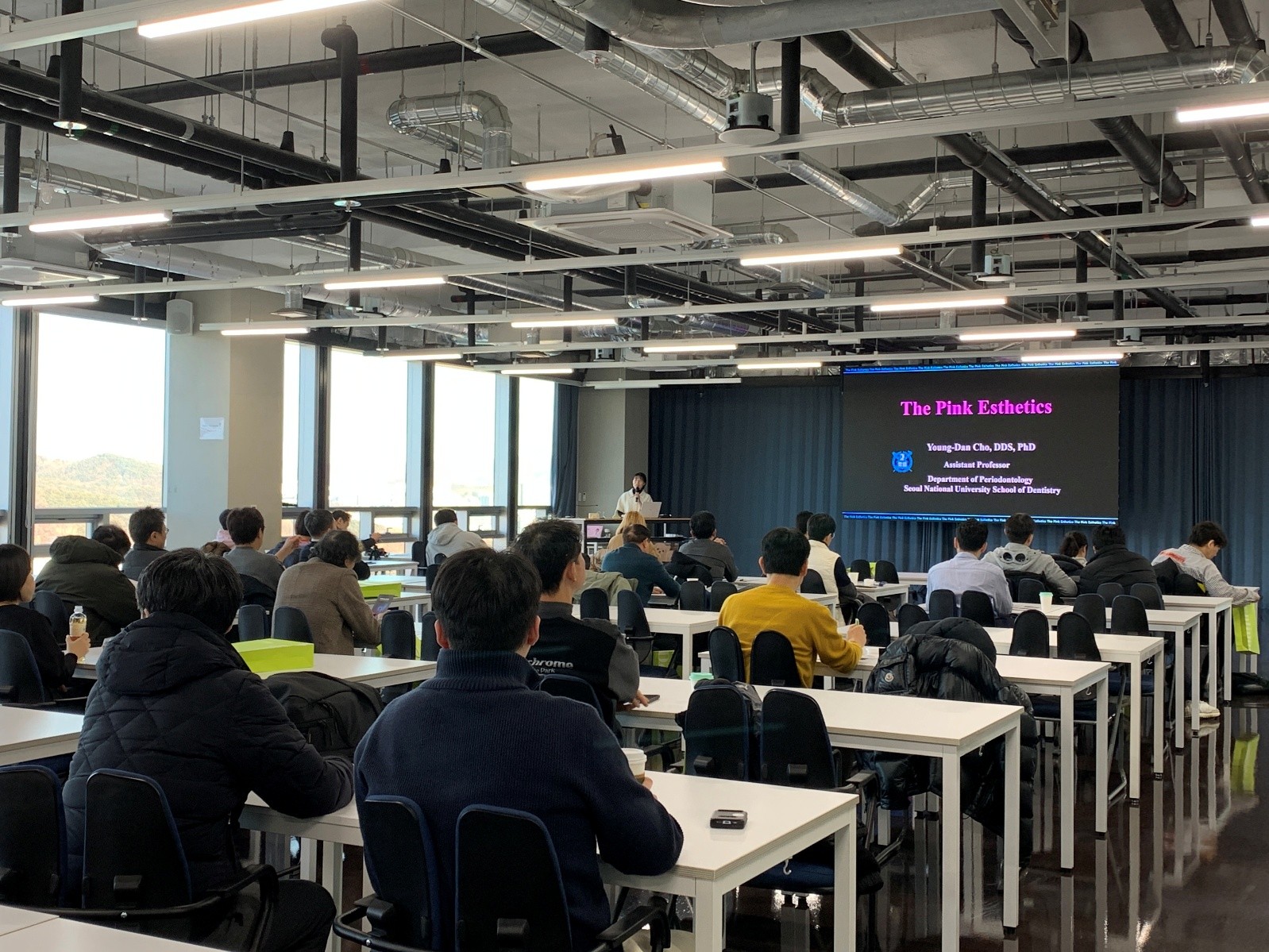
Dentium held its 9th “Filler & Toxin Seminar” on February 7 at its headquarters in Gwanggyo, bringing together dental professionals to explore clinical applications of dermal fillers and botulinum toxin in dentistry.
Now in its ninth edition, the seminar has become one of Dentium’s representative educational programs. With continued participation and growing interest each year, it has established itself as a key platform for discussing the integration of filler and toxin treatments into dental practice.
Expanding Clinical Applications in Dentistry
As the use of fillers and botulinum toxin continues to expand within dentistry, their role has evolved beyond esthetic enhancement to include functional improvement. Reflecting this trend, the seminar focused on case-based lectures and practical techniques that clinicians can directly apply in daily practice.
The program featured Prof. Young-Dan Cho (Department of Periodontology, Seoul National University Dental Hospital) and Dr. Sung-Min Jung (Dentium Dental Clinic) as speakers. Their presentations covered a wide spectrum of clinical approaches, ranging from intraoral filler applications to combined esthetic and functional treatment strategies.
Prof. Cho presented treatment strategies for intraoral filler applications in dentistry. In particular, she introduced soft tissue augmentation techniques combining Dentium’s Collagen Graft with dermal fillers in black triangle cases, demonstrating diversified approaches to soft tissue management.
She also addressed esthetic and functional treatment strategies for elderly patients. Clinical cases illustrated how peri-oral filler and botulinum toxin applications, used in conjunction with implant therapy, can extend beyond functional rehabilitation to improve facial esthetics and psychological satisfaction.
In cases where denture patients transition to fixed prostheses, she explained that fillers can compensate for perioral volume loss and wrinkles, contributing to improved patient confidence and quality of life. Management of potential complications was also discussed, including emergency protocols using hyaluronidase injections for filler-related adverse events, as well as injection sites and dosage considerations for botulinum toxin.
From Esthetic Enhancement to Functional Therapy
Dr. Jung followed with a presentation on various clinical cases utilizing fillers and botulinum toxin. He discussed individualized esthetic treatment strategies for achieving natural perioral volume enhancement and introduced clinical insights on soft tissue volume correction and nasal filler applications that may contribute to improved airway function.
He also presented cases involving PN (polynucleotide) and PH applications for soft tissue improvement, emphasizing that treatment indications are expanding beyond facial esthetics into functional therapy.
Particular attention was given to the management of temporomandibular disorders (TMD). Dr. Jung introduced treatment approaches combining PN injections with botulinum toxin for patients presenting with symptoms such as pain during mouth opening, clicking sounds, and masticatory muscle hypertonicity. According to the presented cases, this combined approach demonstrated rapid symptom relief and functional improvement while maintaining a relatively low risk of adverse effects compared to conventional therapies.
He explained that PN’s gel-type formulation allows it to remain within the joint space for an extended period, contributing to lubrication, improved joint movement, and potential anti-inflammatory effects. Concurrent use of botulinum toxin was described as effective in relaxing hyperactive masticatory and cervical muscles.
Live Demonstration and Clinical Discussion
Following the lectures, a live demonstration was conducted on five patients. Safe injection techniques, anatomical considerations, injection sites, and dosage planning were demonstrated in real time. Prof. Cho participated as moderator, providing detailed explanations and facilitating discussion with attendees.
Through the live session, participants gained practical insight into how fillers and botulinum toxin can be safely and effectively integrated into dental practice. Detailed explanations of region-specific techniques and dosage planning were highlighted as particularly valuable for clinical application.
A Dentium representative stated, “As fillers and botulinum toxin become increasingly integrated into dental practice, we will continue to provide structured educational programs to support their safe and effective use—not only in esthetic procedures but also in functional treatment.” The next program, Filler & Toxin 10, is scheduled to take place on May 9.